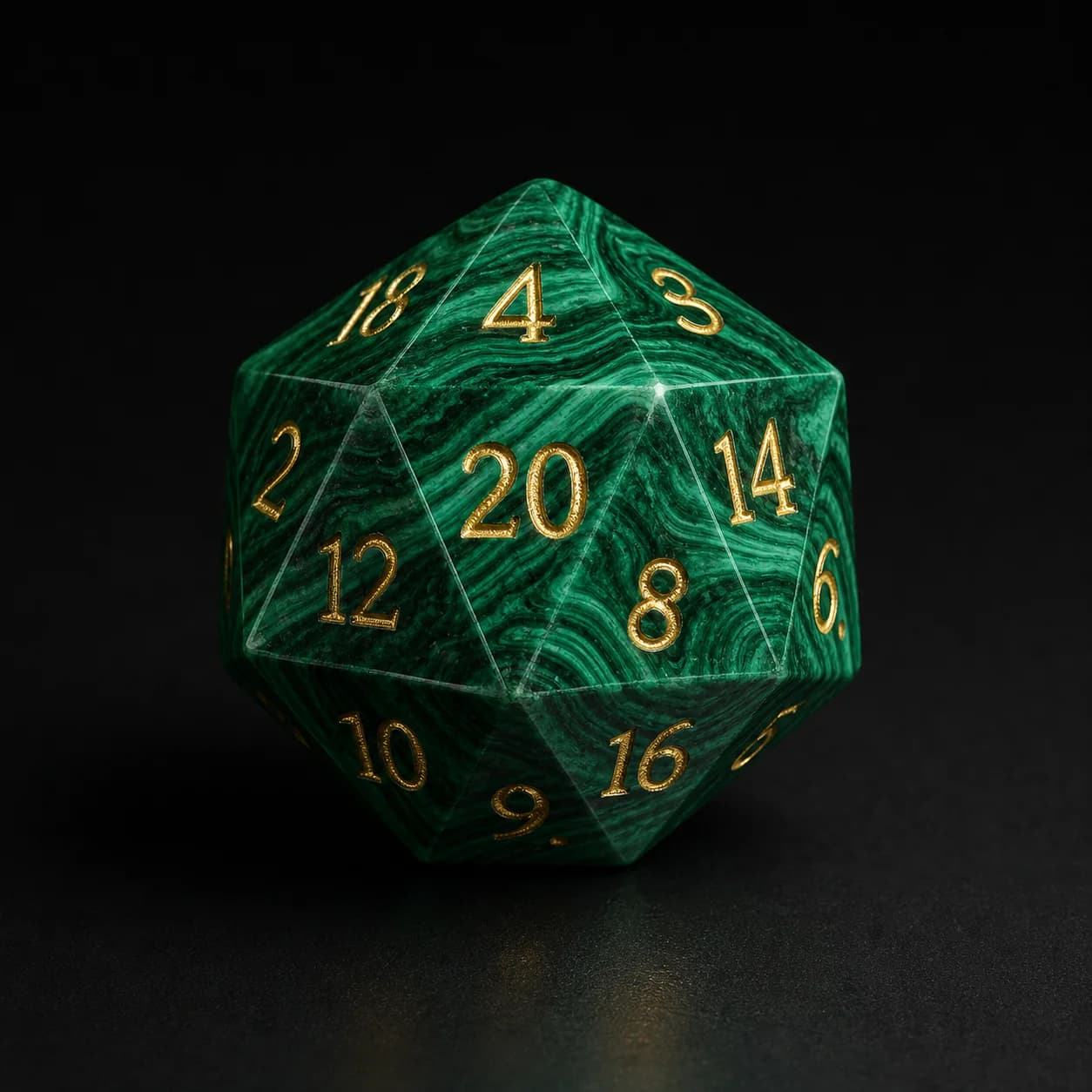
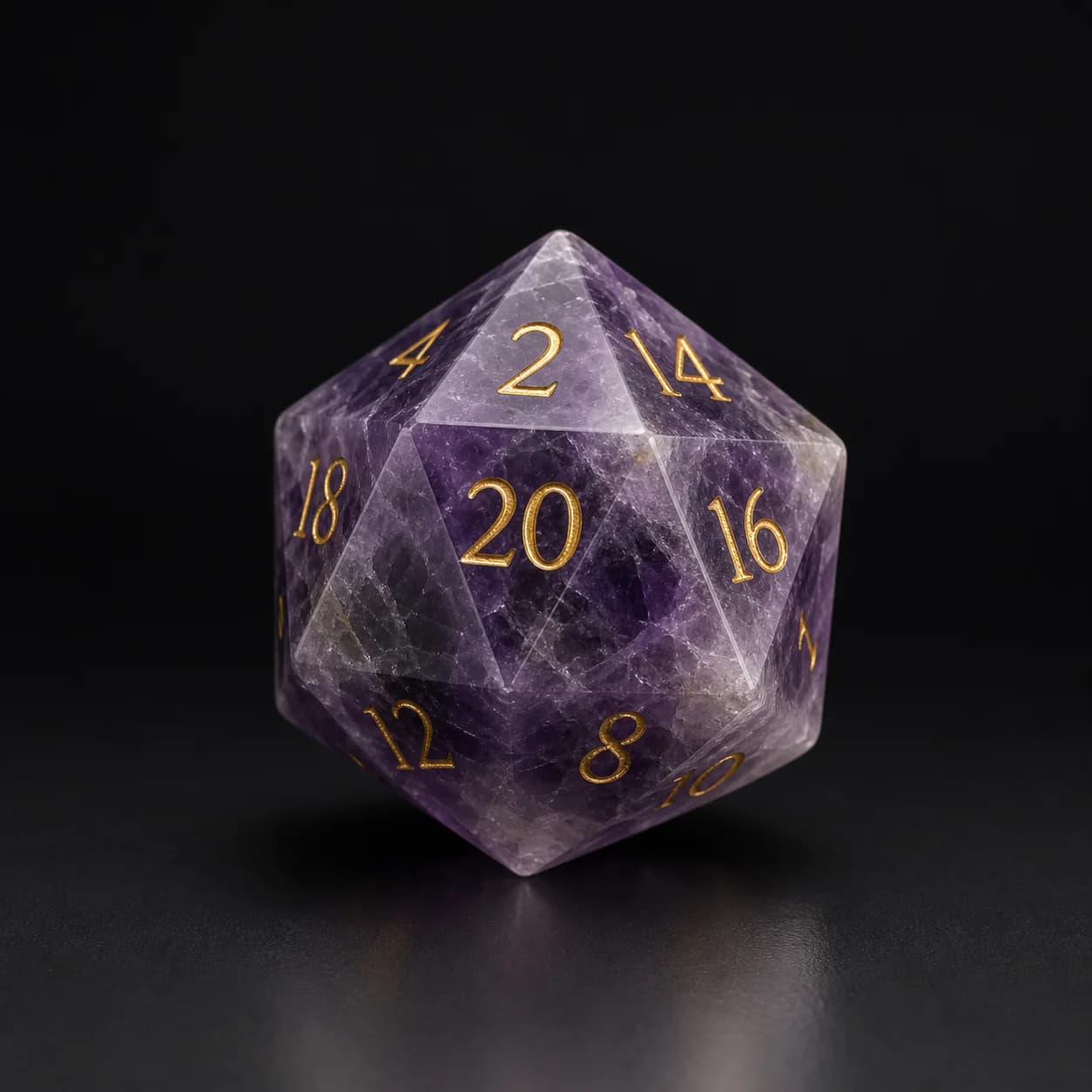
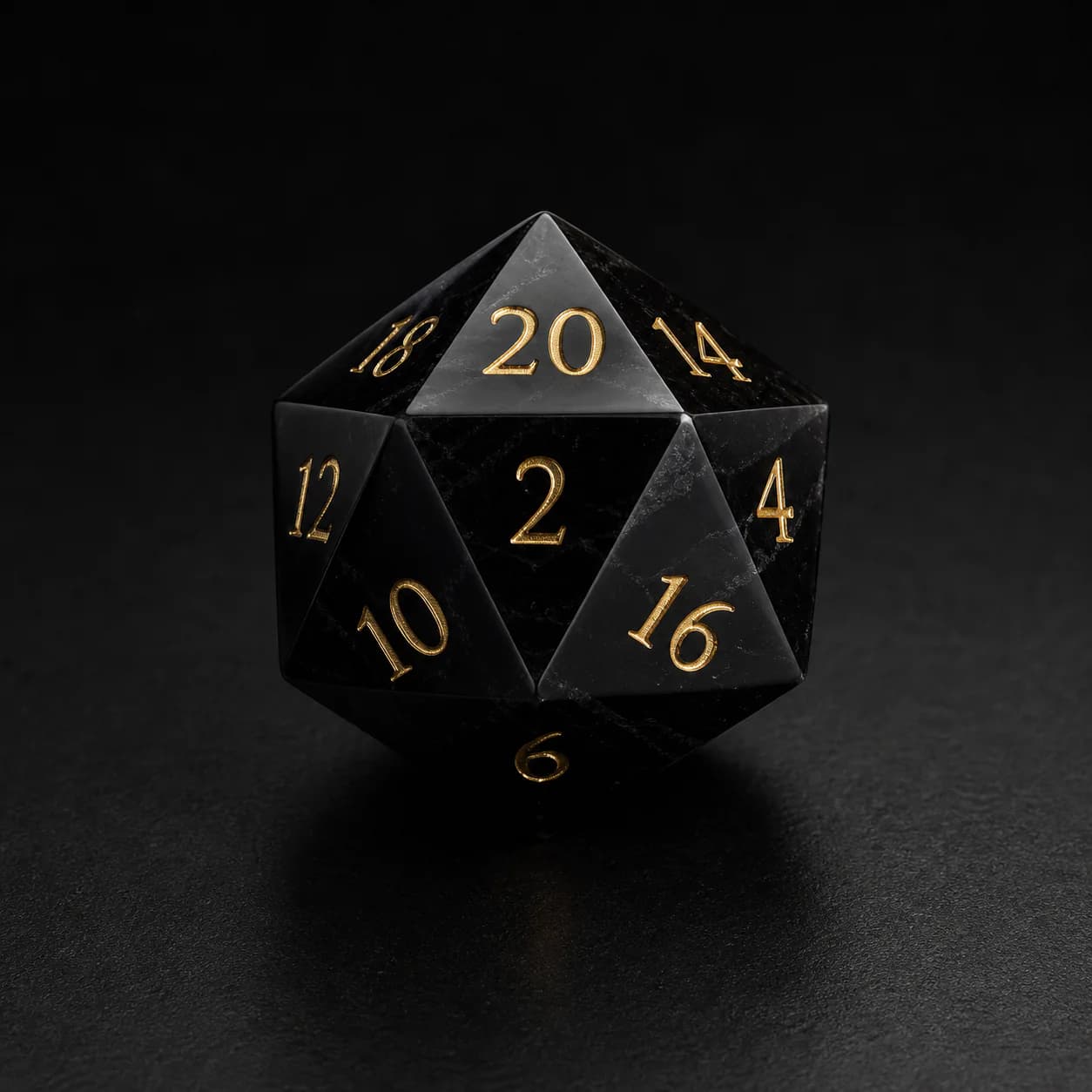
Appearance
A gray-to-dark body with blue, green, or mixed flashes that change by viewing angle.
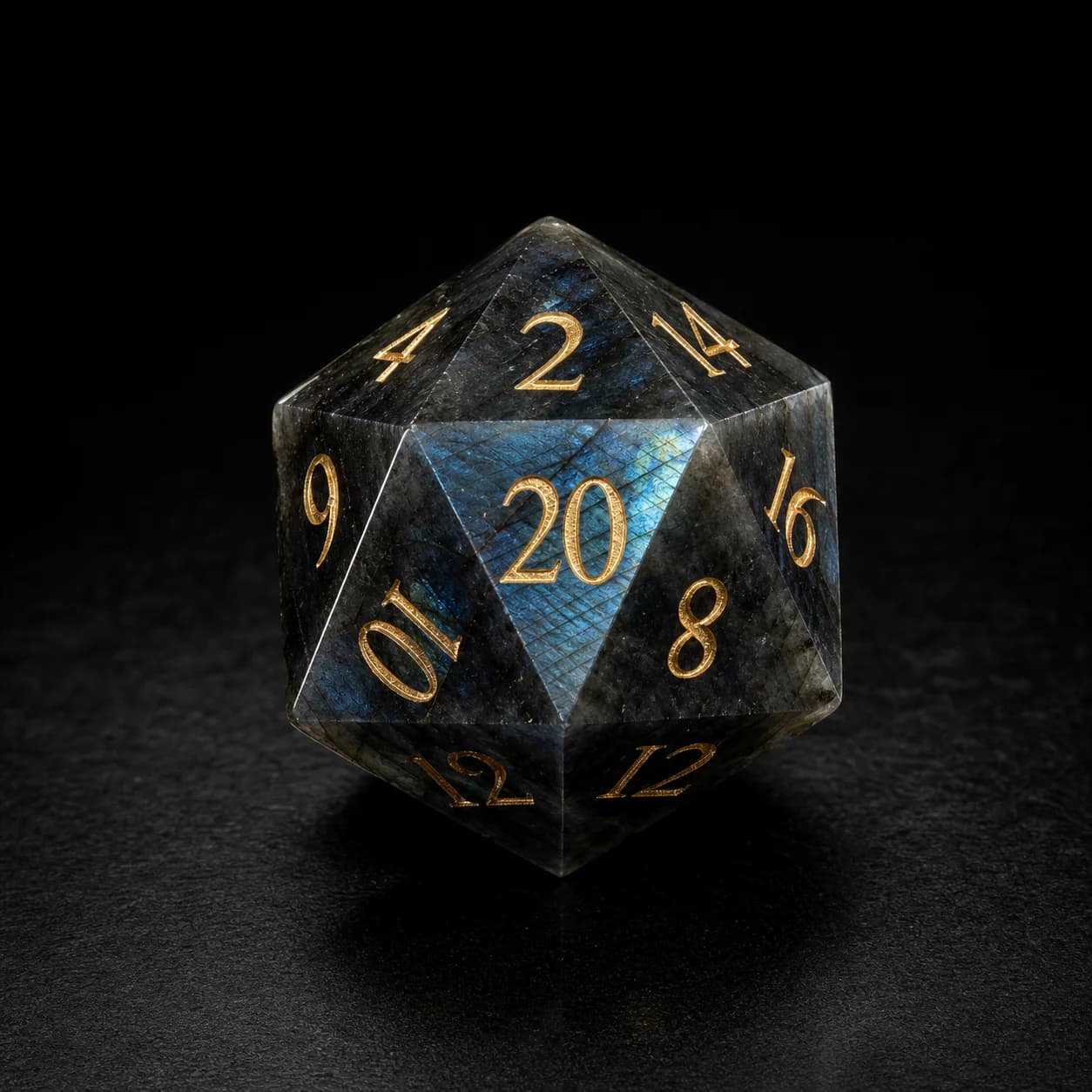
Dark feldspar with flashes of blue and green that appear as the dice move in light. Developed for tabletop brands, retailers, crowdfunding projects, and premium gift programs.
Natural stone is not a flat industrial color. Material selection, an approved sample, and a written visual range help turn its variation into a controlled collection.
A gray-to-dark body with blue, green, or mixed flashes that change by viewing angle.
Collector drops, mystical themes, premium statement dice, and limited-edition assortments.
Silver, pale blue, and gold are common directions; the approved sample should balance inlay with natural flash.
Flash color, coverage, and viewing angle vary significantly and should be treated as a defining natural feature.
Especially effective for mystical, northern-light, moon, and premium collector concepts.
A presentation box that controls orientation and contrast helps buyers see the material at its best.
Yes. Labradorite dice can be developed with custom number styles, selected logo or symbol faces, coordinated inlay colors, and private-label packaging. Artwork feasibility is confirmed before sampling.
The standard starting MOQ is 100 pieces. The final minimum and unit price depend on dice format, engraving, set configuration, material selection, and packaging.
No. Natural Labradorite varies in tone, pattern, and internal character. A sample and agreed visual range are used to align expectations before volume production.
Selected specifications can start from US$1 per piece. Final pricing follows the confirmed material, geometry, branding, quantity, and packaging.